BBB Accredited Business.
A+ Rating
100% Financing,
No Money Down Get
Prequalified In Minutes
Over 19 Years Of Experience
Licensed , Bonded Insured
Thousands of customers all
over Southern California
Why Standard Patio Covers Fail in San Diego: The Science of Foam-Core Laminated Roof Panels
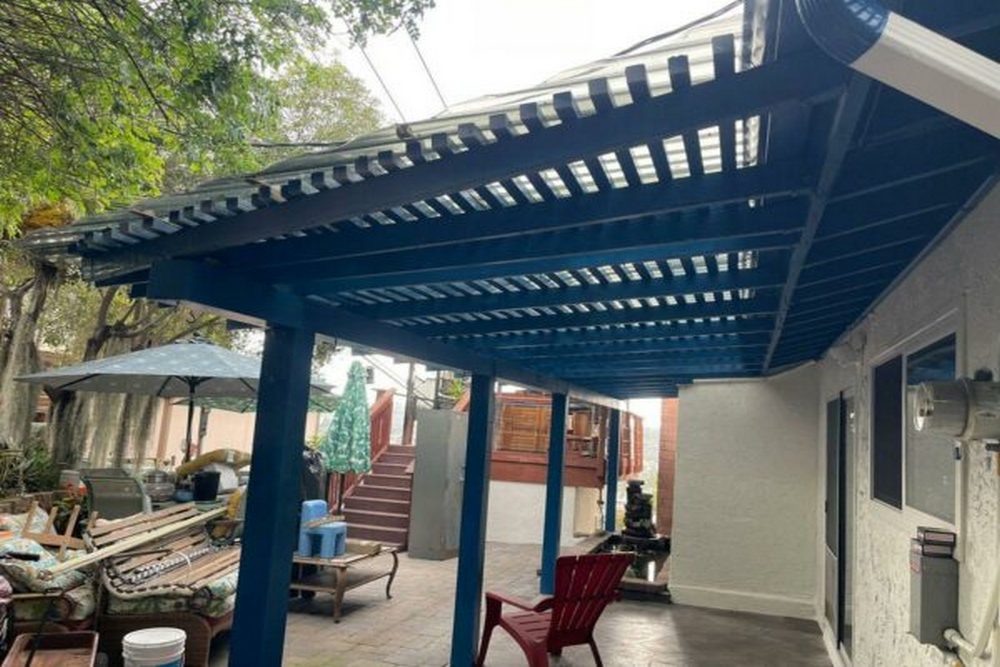
Inland and coastal San Diego communities—from Chula Vista and El Cajon to Poway and Lakeside experience intense summer sun. Homeowners often install basic aluminum or wood slat patio covers to create shade, only to discover that the patio underneath remains stifling hot.
The reason standard patio covers fail to deliver true comfort comes down to thermal physics. This guide explores why traditional metal and wood covers absorb and radiate heat, and how laminated foam-core insulated patio covers drop outdoor surface temperatures by up to 20 degrees.
1. The Thermal Trap: Why Single-Skin Aluminum Absorbs Heat
Traditional patio covers are constructed from single sheets of embossed aluminum or thin wood slats.
- RadiantHeat Conduction: When direct sunlight beats down on a single-skin metal roof, the metal absorbs solar radiation rapidly. Because aluminum is highly conductive, the roof acts as a giant radiator, pumping infrared heat downward onto anyone sitting
- TheGreenhouse Effect: Patios enclosed by concrete slabs or pavers trap this radiant heat, turning your backyard into an outdoor oven during peak afternoon hours.
2. The Engineering of Laminated Roof Panels (LRP)
Modern insulated patio covers manufactured by industry leaders utilize Laminated Roof Panels (LRP) engineered around composite sandwich construction:
INSULATED LRP PANEL CROSS-SECTION
[ Heavy-Gauge Embossed Aluminum Skin ] ◄── Reflects Exterior UV Rays
──────────────────────────────────────
[ High-Density EPS / Polyurethane Core ] ◄── Thermal Break (Blocks 100% Heat)
──────────────────────────────────────
[ Heavy-Gauge Embossed Aluminum Skin ] ◄── Stays Cool to the Touch Below
- TheFoam Thermal Break: A dense expanded polystyrene (EPS) or polyurethane foam core is sandwiched between two heavy-gauge aluminum skins. This core creates an impenetrable thermal break that blocks 100% of overhead radiant heat transfer.
- Verified Temperature Drop: Independent thermal testing proves that solid insulated patiocovers reduce ambient and surface temperatures underneath the canopy by 15 to 20 degrees Fahrenheit.
- IntegratedUtility Raceways: Insulated panels feature internal wire channels, allowing professional electricians to install ceiling fans, recessed LED puck lights, and audio speakers without exposed conduit.
3. Patio Cover Material Comparison Matrix
| Patio Cover Specification | Single-Skin Aluminum | Alumawood Lattice Slats | Solid Insulated Foam-Core (LRP) | Motorized Louvered Roof System |
| UV Radiation Blockage | Partial (Absorbs & radiates heat) | 40% – 60%
partial shade |
100% Complete UV Blockage | Adjustable (Open
/ Closed louvers) |
| Ambient Temperature Impact | Radiates heat downward | Minimal cooling effect | Drops temp by 15° – 20°F | Variable based on louver angle |
| Rain & Weather Protection | Yes (Leaks at seams) | No (Open lattice lets rain through) | 100%
Waterproof Gutter System |
Automated rain sensors |
| Estimated Investment Scope | $6,000 – $9,000 | $7,000 –
$12,000 |
$12,000 –
$22,000 |
$25,000 –
$40,000+ |
Conclusion
If you want an outdoor living space that remains comfortable during scorching summer afternoons, standard single-skin shade covers are not enough. Upgrading to an engineered foam-core insulated patio cover transforms your backyard into a cool, weather-protected sanctuary.